Equipment failure doesn't always announce itself with warning signs. One moment, a conveyor belt hums steadily; the next, a technician reaches inside for an adjustment—and a sudden energy release crushes their hand. These incidents aren’t just tragic. They’re preventable. The lockout tagout (LOTO) procedure exists precisely to stop them. But knowing that LOTO matters is different from knowing how it works in practice. This article dives into real, actionable lockout tagout procedure examples that reflect how industries apply safety protocols in high-risk environments.
Why Real LOTO Examples Beat Theoretical Guidelines
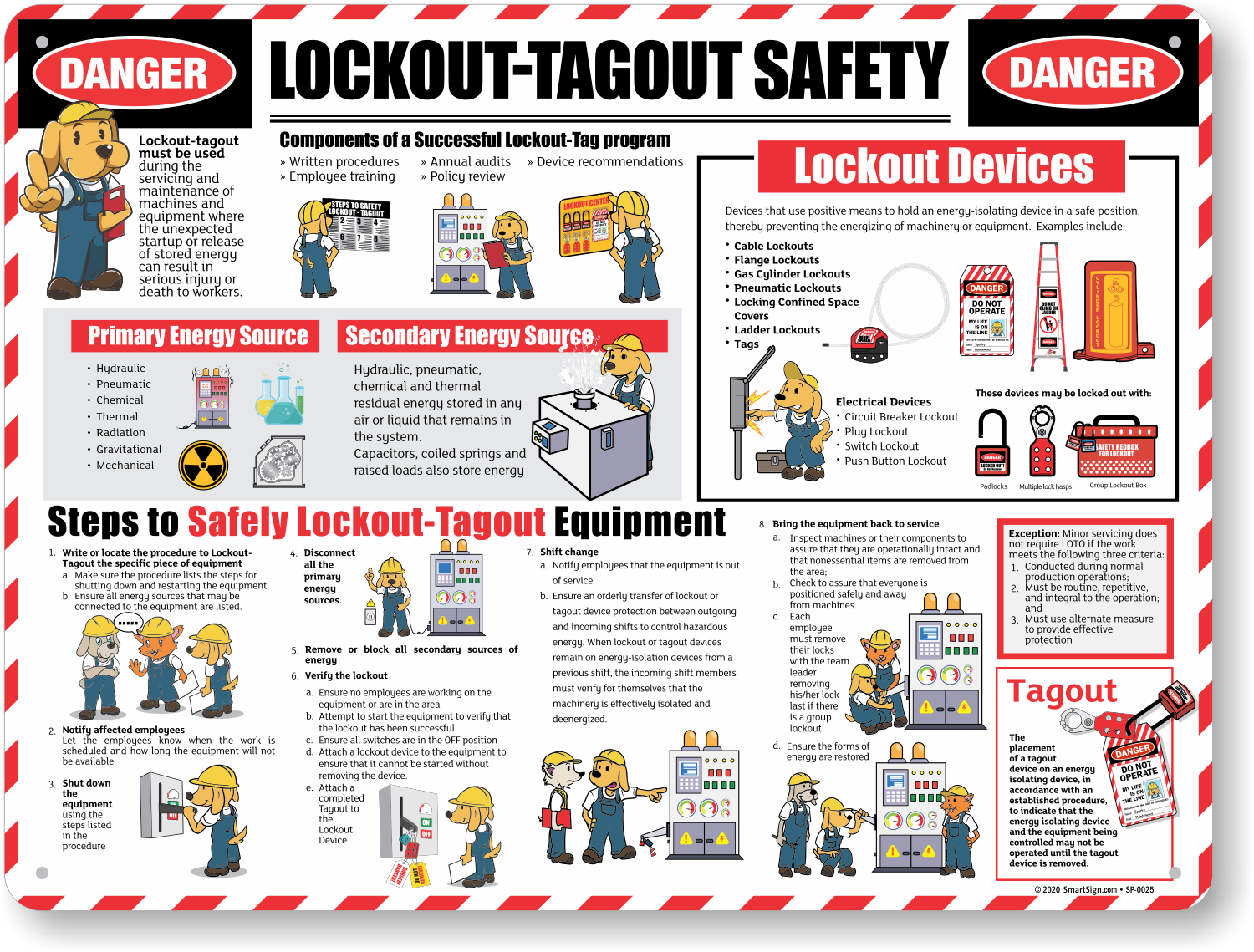
OSHA standard 1910.147 outlines the legal framework for controlling hazardous energy. But guidelines alone don’t protect workers. Implementation does. And implementation depends on context: the type of machinery, energy sources involved, team size, and maintenance complexity.
Generic LOTO plans fail when they don’t account for specific workflows. That’s why practical examples are critical. They transform abstract rules into repeatable, reliable actions.
Consider this: a manufacturing plant had a perfect LOTO policy on paper. Yet a maintenance worker was injured when a hydraulic press activated during service. Investigation revealed the procedure didn’t address residual pressure release—a step common in hydraulics but overlooked in their one-size-fits-all checklist.
Real examples fix gaps like these.
Example 1: Conveyor System Maintenance in a Packaging Plant
Scenario: A technician must clear a jam in a multi-section conveyor system powered by electric motors and pneumatics.
- LOTO Procedure Steps:
- Notify Operations: Inform the supervisor and operations team about scheduled maintenance.
- Shut Down Equipment: Stop the conveyor using the control panel.
- Isolate Energy Sources:
- - Flip the main disconnect switch for the electric motor.
- - Close the compressed air shutoff valve and bleed residual pressure.
- - Technician places a personal lock on the disconnect switch.
- - Tags indicate name, department, and reason: “Do Not Operate – Clearing Jam – J. Rivera, Maintenance.”
- Verify Zero Energy: Attempt to restart the system (using jog function) to confirm it won’t start.
- Perform Work: Clear the jam safely.
- Restore Safely: Remove locks only after ensuring all tools are clear and personnel are at a safe distance. Re-energize in reverse order.
Key Insight: Multiple energy sources require multiple isolation points. A single lock on the electrical panel isn’t enough—pneumatic lines must also be bled and locked.
Example 2: Boiler Maintenance in a Commercial Facility
Scenario: Annual inspection requires opening the boiler chamber, which exposes risk from steam, gas, and electrical hazards.

- LOTO Procedure Steps:
- Plan the Shutdown: Schedule during low-usage hours. Notify building management.
- Cool Down: Allow the boiler to cool below safe servicing temperature (typically under 100°F).
- Isolate Energy:
- - Shut off natural gas supply valve and lock it.
- - Disconnect main power at the breaker panel.
- - Close steam outlet valves and drain lines.
- Lock and Tag:
- - Use a group lockout box. Each technician places their lock on the gas valve and electrical disconnect.
- - Tags include “Boiler Inspection – No Operation Until Further Notice.”
- Verify Isolation: Test for gas presence with a detector. Confirm electrical circuits are dead using a voltage tester.
- Conduct Inspection: Open chamber and inspect tubes, burners, and controls.
- Re-energize: Only after reassembly, pressure testing, and team confirmation—remove locks in sequence.
Common Mistake: Rushing the cooldown phase. Residual heat can cause steam flash or scalding even after shutdown.
Example 3: Hydraulic Press in an Automotive Stamping Line
Scenario: Die change requires access to the press bed where high-force movement occurs.
- LOTO Procedure Steps:
- Initiate Lockout: Supervisor announces die change. Line stops.
- Shut Down: Press is stopped via e-stop. Control mode switched to “maintenance.”
- Isolate Power Sources:
- - Main electrical disconnect locked out.
- - Hydraulic pump isolation valve closed and locked.
- - Accumulators depressurized using bleed valves.
- Apply Locks: Each maintenance team member applies their personal lock.
- Test for Zero Energy: Attempt to cycle the press—nothing should move. Check accumulator gauges for zero pressure.
- Perform Die Change: Mechanics swap dies, inspect clamps, and validate alignment.
- Clear Area and Restore: Confirm all personnel are clear. Unlock in sequence. Re-pressurize hydraulics slowly.
Critical Detail: Hydraulic accumulators store energy even after pumps shut off. Failure to bleed them is a leading cause of LOTO-related injuries in stamping operations.
Example 4: Overhead Crane in a Steel Yard
Scenario: A crane operator reports erratic hoist movement. Electrician needs to inspect control circuits.
- LOTO Procedure Steps:
- Secure the Load: If a load is suspended, lower it safely before shutdown.
- Deactivate Crane: Use the cab switch to turn off power.
- Isolate Power:
- - Lock out the main disconnect at the runway power feeder.
- - Isolate control circuit breaker in the panel.
- Lock and Tag: Apply personal lock and tag with purpose and name.
- Verify De-energization: Test control buttons—no response should occur.
- Inspect Wiring: Check for frayed cables, loose terminals, or moisture damage.
- Re-energize: Remove locks only after confirming tools are clear and the runway is free of personnel.
Risk Highlight: Crane LOTO is often overlooked because the operator remains in the cab. But maintenance on electrical systems requires full de-energization—even if the crane appears off.
Example 5: Chemical Mixing Tank
with Agitator
Scenario: Cleaning requires entry into a large mixing tank with a rotating agitator and chemical residue.
- LOTO Procedure Steps:
- Empty and Flush: Drain chemicals and rinse the tank.
- Ventilate: Use forced-air ventilation to remove fumes. Test atmosphere for oxygen levels and toxins.
- Isolate Energy:
- - Lock out the motor disconnect for the agitator.
- - Isolate any heating elements or jacket coolant lines.
- Lock and Tag: Apply locks and tag for confined space entry.
- Verify Isolation: Try to start the agitator—no movement allowed.
- Enter Safely: Use harness and lifeline. Monitor air continuously.
- Exit and Restore: Once cleaning is complete, remove locks only after all entrants are out and equipment is confirmed clear.
Regulatory Note: This scenario overlaps OSHA’s confined space entry (1910.146) and LOTO (1910.147). Dual compliance is mandatory.
Common LOTO Procedure Mistakes (and How to Fix Them)
Even with solid examples, execution often falters. Here are recurring issues:
- Using Tags Without Locks: Tags alone aren’t sufficient. Locks physically prevent activation.
- Shared or Master Locks: Personal locks only. A master key undermines accountability.
- Skipping Verification: Assuming “it’s off” without testing leads to false confidence.
- Incomplete Energy Isolation: Overlooking secondary sources like springs, gravity, or capacitors.
- Poor Tag Information: Vague tags like “Under Maintenance” don’t identify who locked it or why.
Fix: Use standardized LOTO checklists tailored to each machine. Train teams to verify every energy source.
Designing Your Own LOTO Procedures: A Practical Framework
Creating effective LOTO procedures isn’t about copying templates. It’s about mapping real risks. Use this workflow:
- Identify Equipment: List all machines requiring maintenance.
- Map Energy Sources: For each, document electrical, mechanical, hydraulic, pneumatic, chemical, thermal, and gravitational sources.
- Define Shutdown Sequence: Step-by-step shutdown, isolation, and lockout actions.
- Assign Accountability: Who applies locks? Who verifies isolation?
- Test and Refine: Conduct periodic drills. Simulate re-energization attempts.
- Document and Train: Keep procedures accessible. Retrain annually or after incidents.
Pro Tip: Use machine-specific LOTO sheets with diagrams showing isolation points. Visuals reduce confusion during high-pressure situations.
Final Thoughts: Turn Examples Into Action
Lockout tagout isn’t a box to check. It’s a culture of precision. The examples above aren’t just hypotheticals—they’re reflections of documented incidents and proven solutions. The best LOTO programs don’t rely on memory. They rely on documented, practiced, and machine-specific procedures.
If your facility still uses a generic LOTO policy, start today. Pick one high-risk machine. Break down its energy sources. Draft a step-by-step lockout sequence. Test it. Refine it. Then move to the next.
Safety isn’t built in policy manuals. It’s built in the details of execution.
FAQ
What is a lockout tagout procedure? A lockout tagout procedure is a safety process that isolates energy sources from equipment and uses locks and tags to prevent accidental startup during maintenance.
Can tagout be used alone without lockout? Yes, but only if a tagout-only program meets OSHA's strict requirements, including no possibility of accidental energization. Lockout is always preferred.
Who is responsible for applying LOTO? Each authorized employee performing servicing must apply their own personal lock and tag.
How many energy sources should be controlled in LOTO? All sources—electrical, mechanical, hydraulic, pneumatic, chemical, thermal, or gravitational—must be identified and isolated.
What happens if a worker is injured during LOTO? An investigation determines if procedures were followed. OSHA may cite violations if LOTO was incomplete or improperly applied.
Do LOTO procedures need to be written? Yes. OSHA requires documented procedures for machines with multiple energy sources or complex shutdown processes.
Can multiple people use one lockout device? Yes, through a group lockout box. Each worker applies their personal lock to the box, which holds the key to an isolation point.
FAQ
What should you look for in Lockout Tagout Procedure Examples You Need to Know? Focus on relevance, practical value, and how well the solution matches real user intent.
Is Lockout Tagout Procedure Examples
You Need to Know suitable for beginners? That depends on the workflow, but a clear step-by-step approach usually makes it easier to start.
How do you compare options around Lockout Tagout Procedure Examples You Need to Know? Compare features, trust signals, limitations, pricing, and ease of implementation.
What mistakes should you avoid? Avoid generic choices, weak validation, and decisions based only on marketing claims.
What is the next best step? Shortlist the most relevant options, validate them quickly, and refine from real-world results.



:max_bytes(150000):strip_icc():focal(728x275:730x277)/princess-catherine-prince-william-donald-trump-king-charles-iii-trump-state-visit-uk-windsor-091725-8672599a27214b6f8ffdbb07fd7596e4.jpg)

